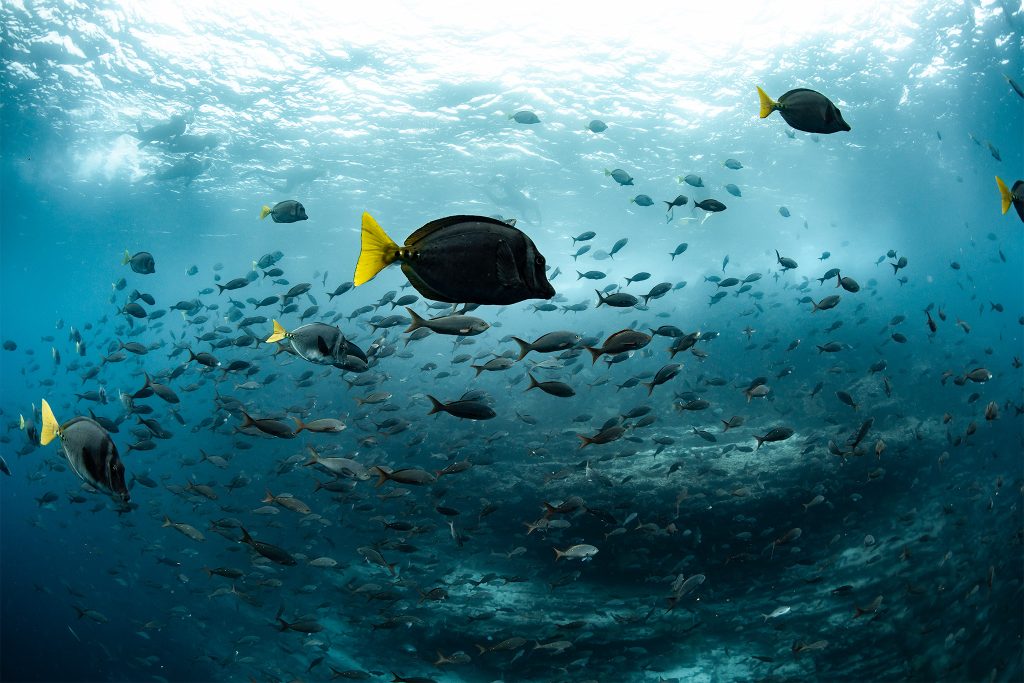


Some of the Galapagos’ most remarkable wildlife encounters begin the moment you slip beneath the surface.
Sea lions glide through the water with effortless curiosity, marine iguanas graze along volcanic rock, and penguins dart past in a blur, revealing an entirely different side of animals you may have just watched from shore.
For snorkelers, freedivers, and scuba divers, knowing where and when to look can make all the difference.
While wildlife is never guaranteed, certain islands, seasons, and conditions offer particularly memorable opportunities to discover the marine life that makes the Galapagos unlike anywhere else on Earth.
1. Swim with Galapagos sea lions
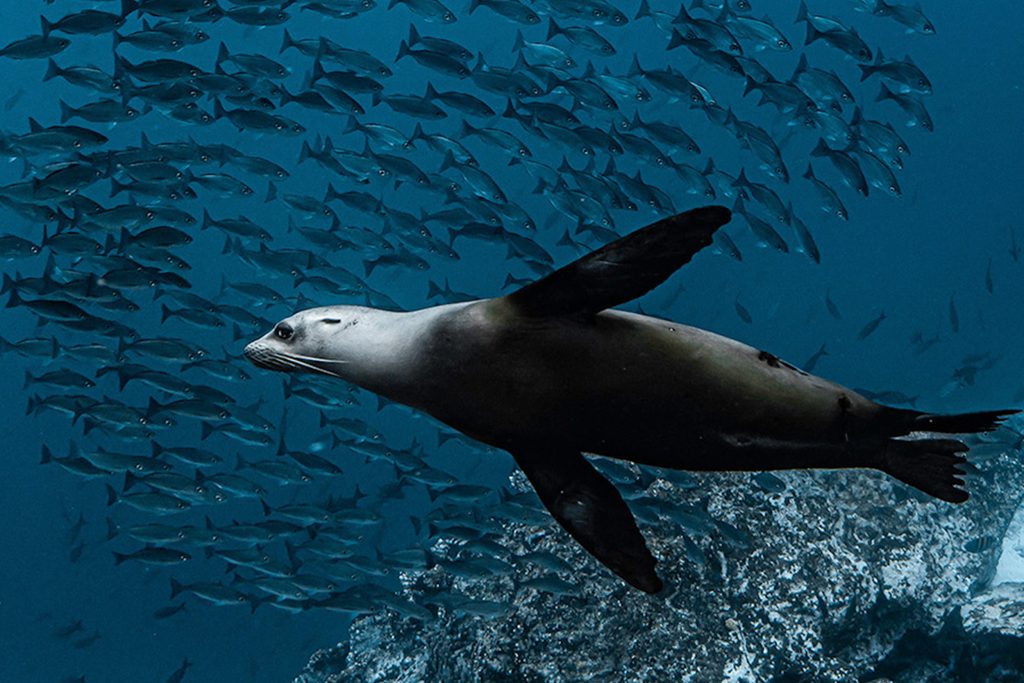
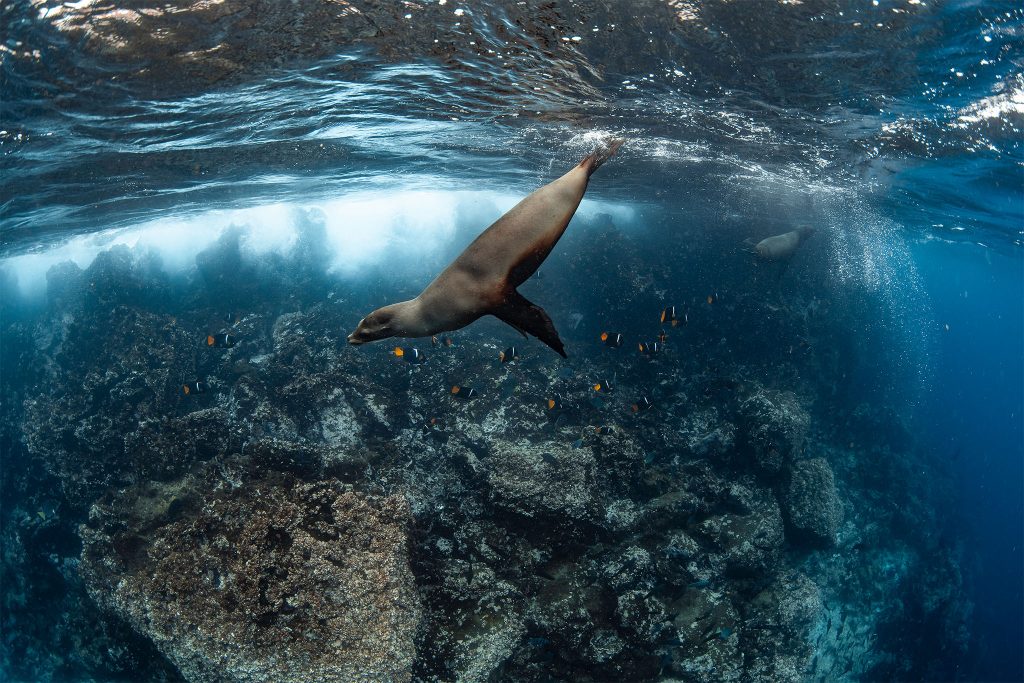
Sea lions can be encountered year-round throughout the Galapagos, with sheltered bays and rocky coastlines offering some of the best opportunities to swim alongside them.
On land, they may spend hours stretched out across a beach, but underwater, their personalities come alive. Curious sea lions twist, dive, and occasionally approach snorkelers for a closer look, making them one of the islands’ most playful underwater encounters.
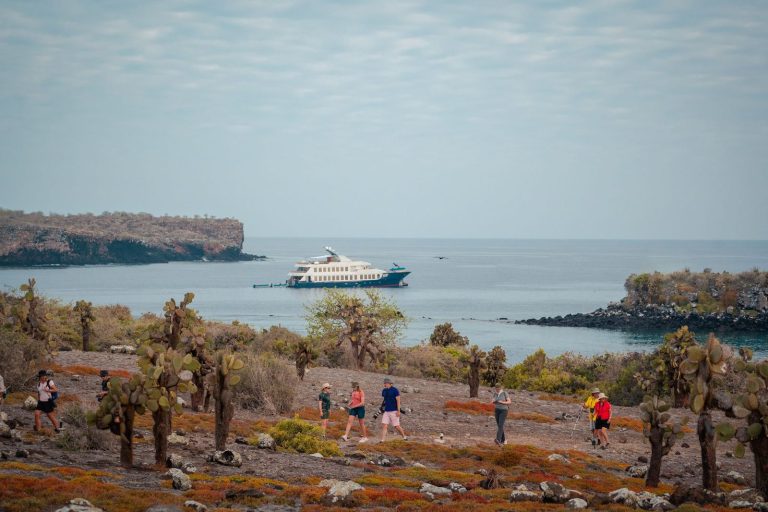
Smaller vessels allow guests to reach remote destinations that larger ships simply cannot access. Expert guides transform excursions into deeper experiences. Days unfold through wildlife encounters, guided exploration, and immersion in the natural world.
The secret is not to chase them. Stay relaxed, give them space, and allow their curiosity to determine the interaction.
For underwater photography, a wide-angle frame can capture their movements as they dart through the water, spin in circles and, if you’re lucky, venture in for a closer look.
2. Watch marine iguanas feed underwater
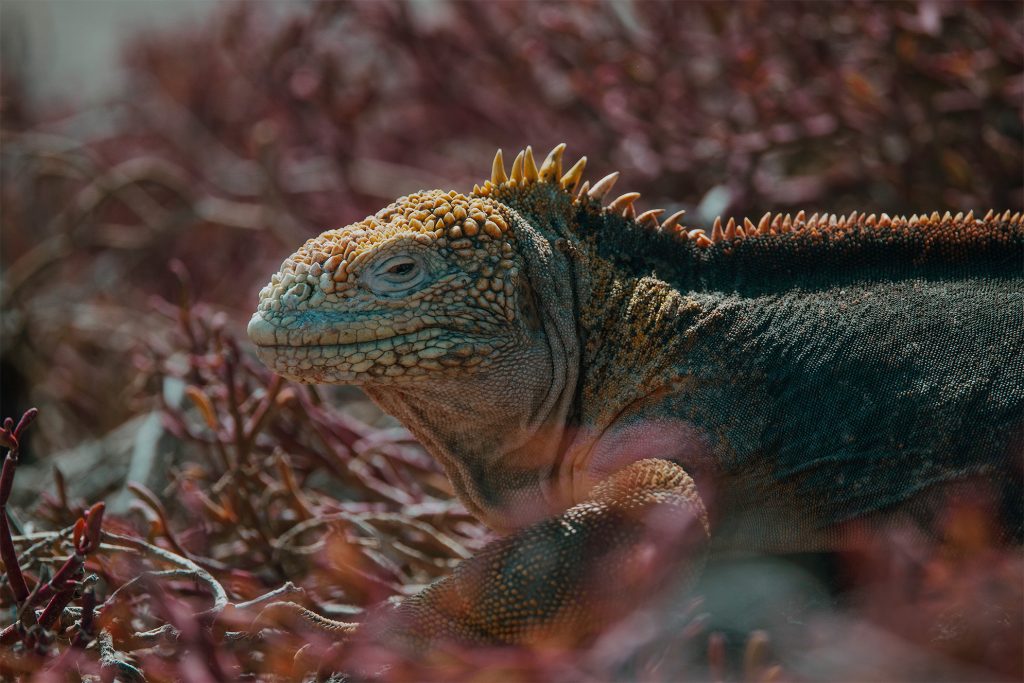
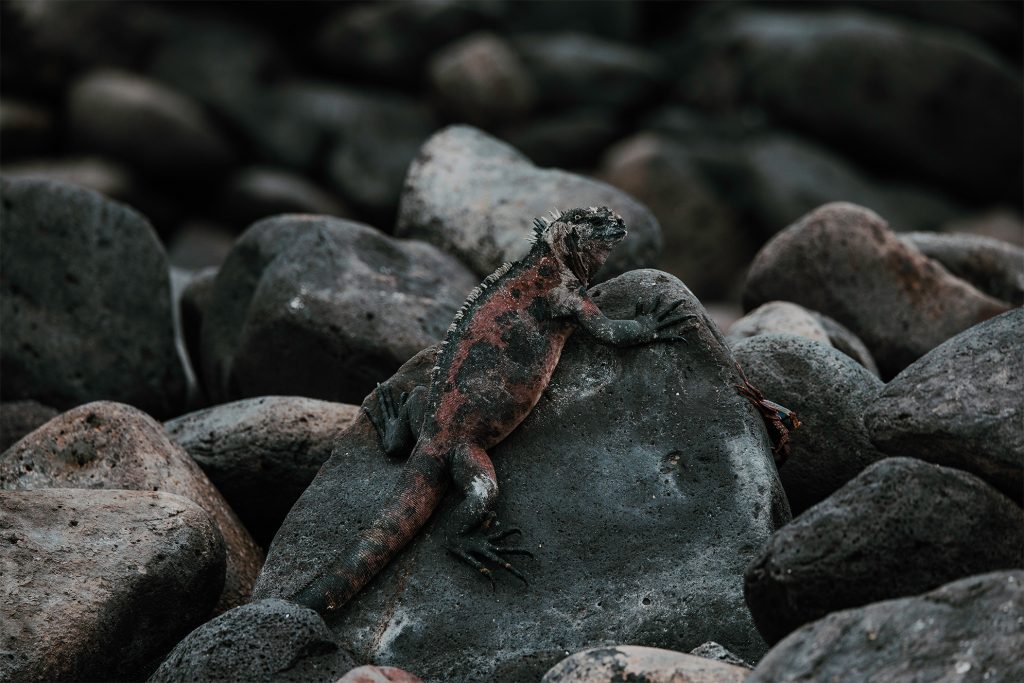
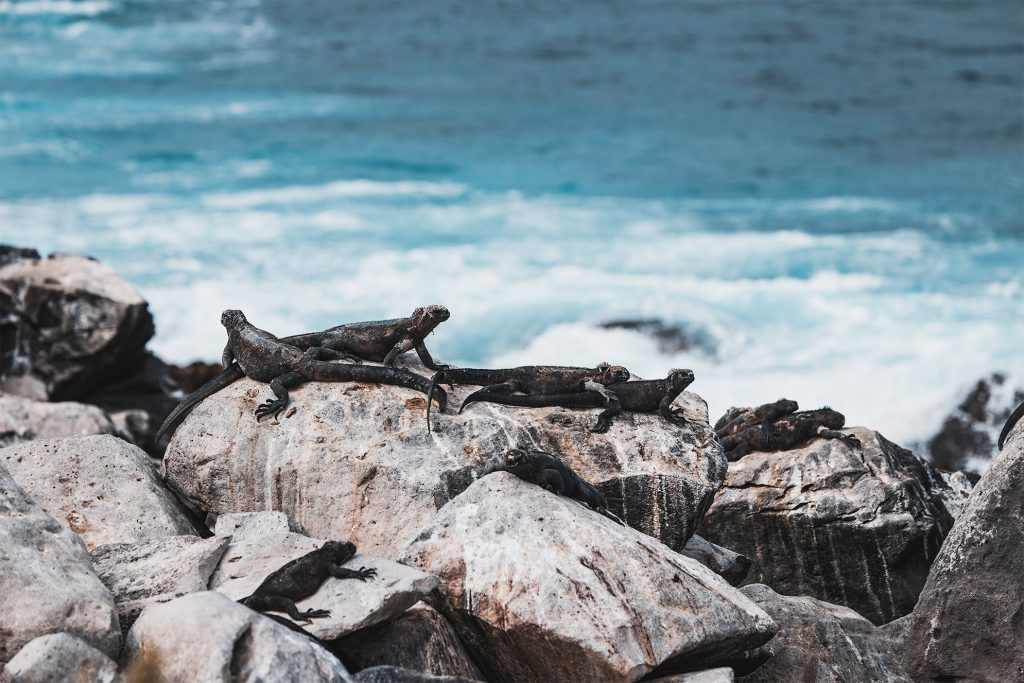
Marine iguanas can be seen feeding beneath the surface along rocky coastlines, particularly around Española, Fernandina, Santa Cruz, Floreana, and Isabela islands.
Found nowhere else on Earth, these prehistoric-looking reptiles have adapted to enter the ocean and graze on algae growing across submerged volcanic rock.
They can be encountered throughout the year, though activity varies with water temperature and feeding conditions.
Snorkelers should watch the rocks rather than the open blue, giving the iguanas plenty of room as they feed. For photographers, composing the animal against the dark lava captures one of the most distinctly Galapagos scenes imaginable.
3. Snorkel alongside Galapagos penguins
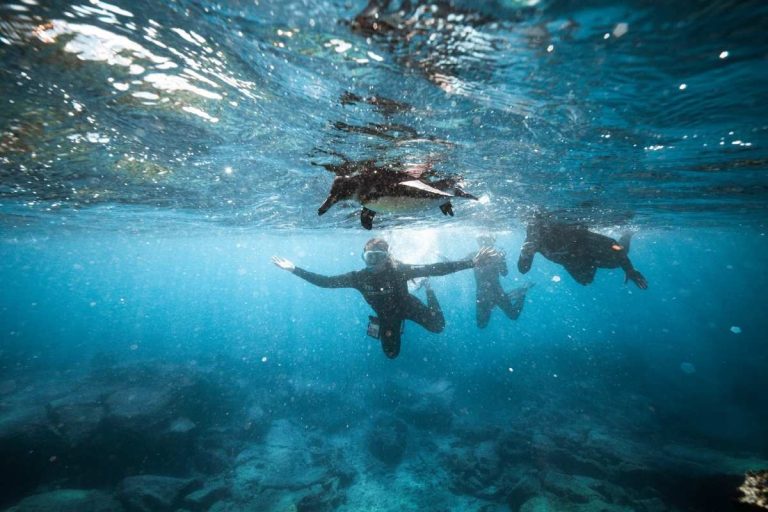
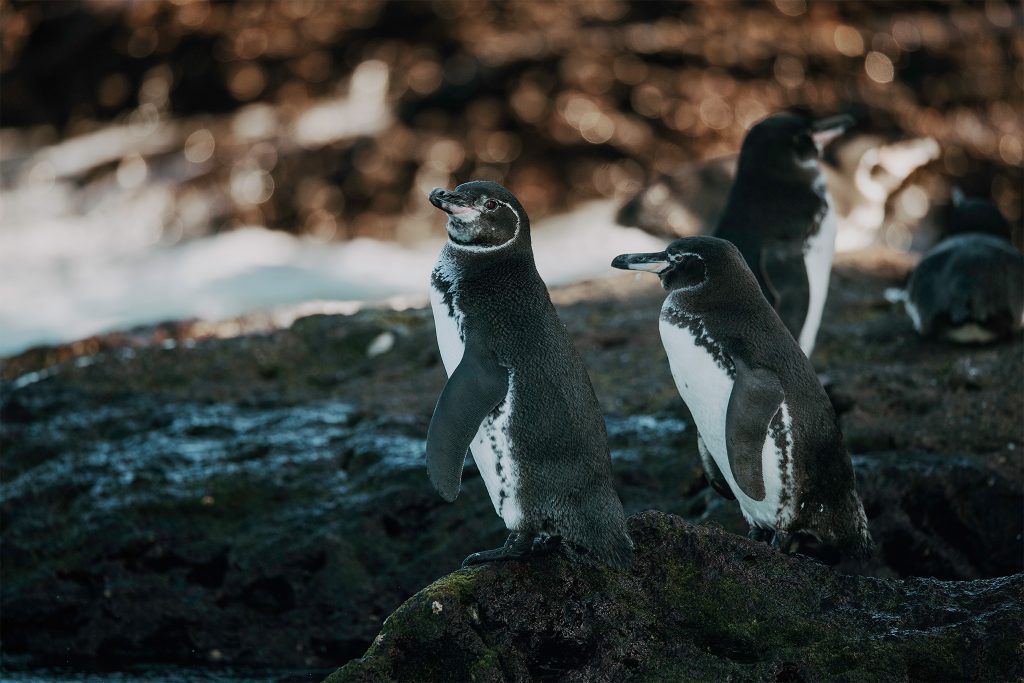
Some of the best opportunities to snorkel with Galapagos penguins are found around Isabela, Fernandina, and Bartolome, where they can be encountered throughout the year.
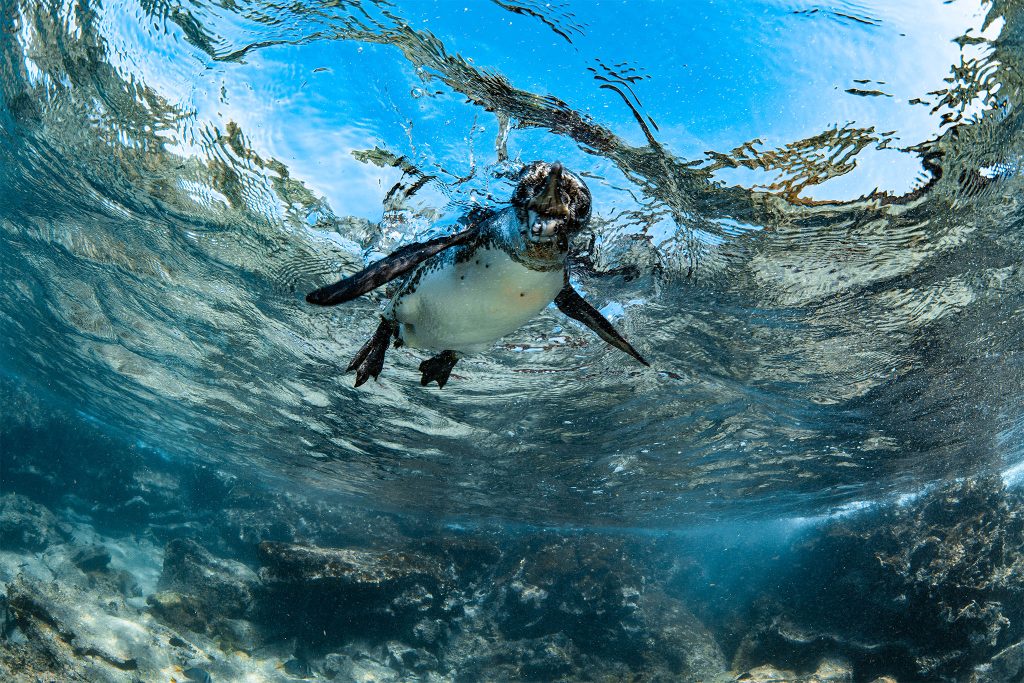
Seeing a penguin this close to the equator is unexpected enough — watching one underwater is even more surprising. They rocket through the sea in pursuit of small fish, changing direction in an instant before disappearing into the blue.
Rather than trying to follow, watch where the penguins are hunting and allow the action to unfold around you
They move quickly, so underwater photographers will want a fast shutter speed and a wider composition that captures the surrounding water along with the bird itself.
4. Look beneath you for rays
Spotted eagle rays, stingrays, and other ray species can be found throughout the Galapagos,often gliding across sandy bottoms, reef edges, and shallow coastal waters.
Their effortless movement can make an encounter feel almost dreamlike, particularly when a ray appears beneath a snorkeler with little warning.
Designed for travelers seeking both exploration and exceptional comfort, each yacht offers the same thoughtfully designed experience: elegant ocean-view staterooms, locally inspired cuisine, attentive service, and beautifully designed social spaces that feel relaxed rather than crowded.
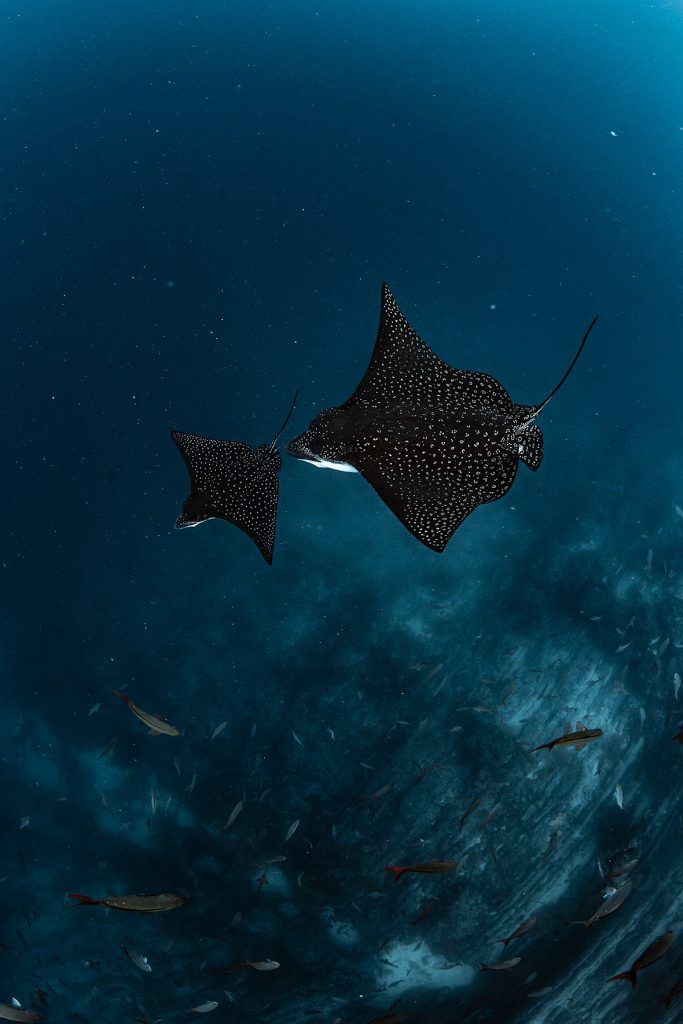
Rays can be encountered year-round, although species and numbers vary by site and season. Scan the seafloor ahead rather than looking only into open water, as rays can blend remarkably well with their surroundings. If one appears, resist swimming directly toward it and instead leave enough distance to watch it move naturally through the water.
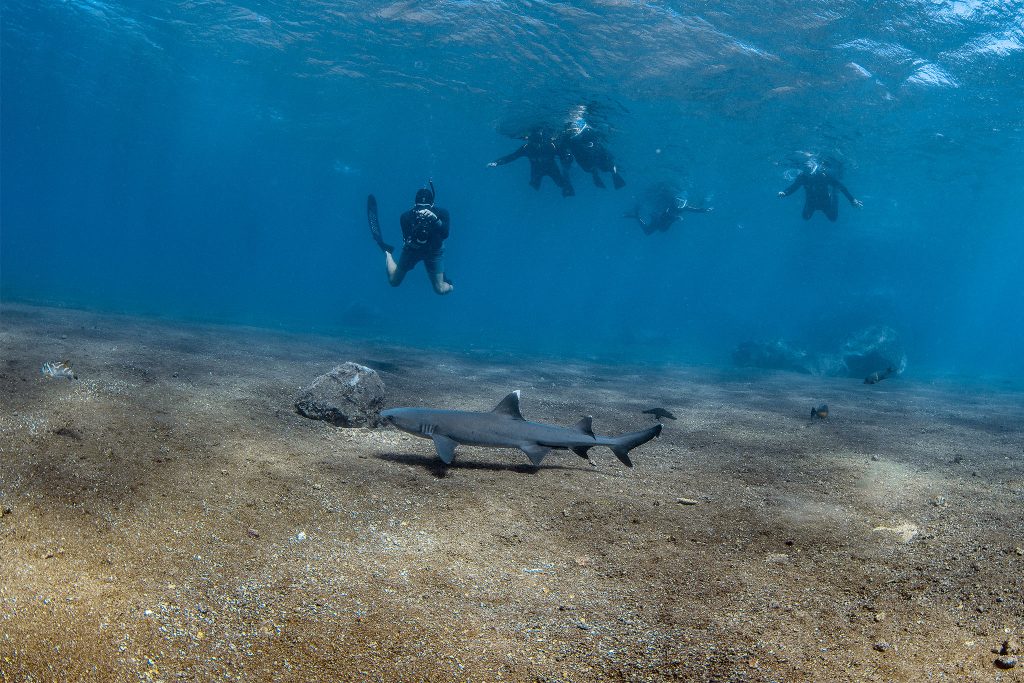
5. Meet whitetip reef sharks
Whitetip reef sharks are found year-round in Galapagos waters and are frequently encountered around islands and islets such as Santa Fe, where they can often be seen resting along sandy bottoms, reefs, and beneath rocky ledges.
Unlike many shark species, whitetips can remain still on the seafloor, sometimes gathering together during the day before becoming more active after dark.
For snorkelers, the key is often simply knowing where to look. Scan beneath overhangs and across sandy areas while maintaining a respectful distance.
Underwater photographers can use the surrounding reef or volcanic formations to also capture the environment it calls home.
6. Drift alongside green sea turtles
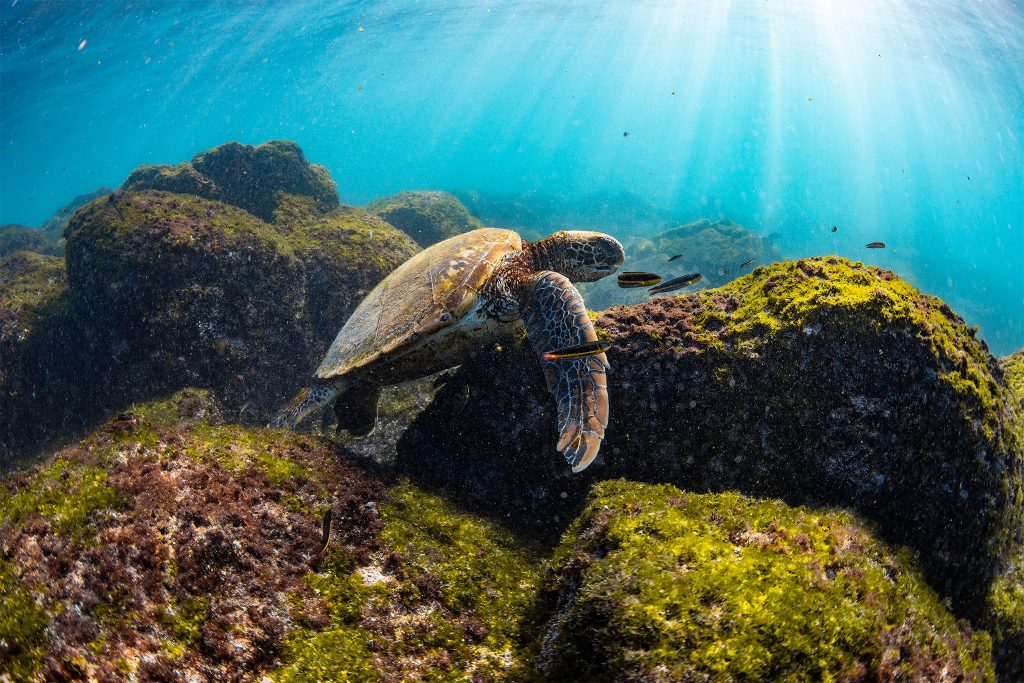
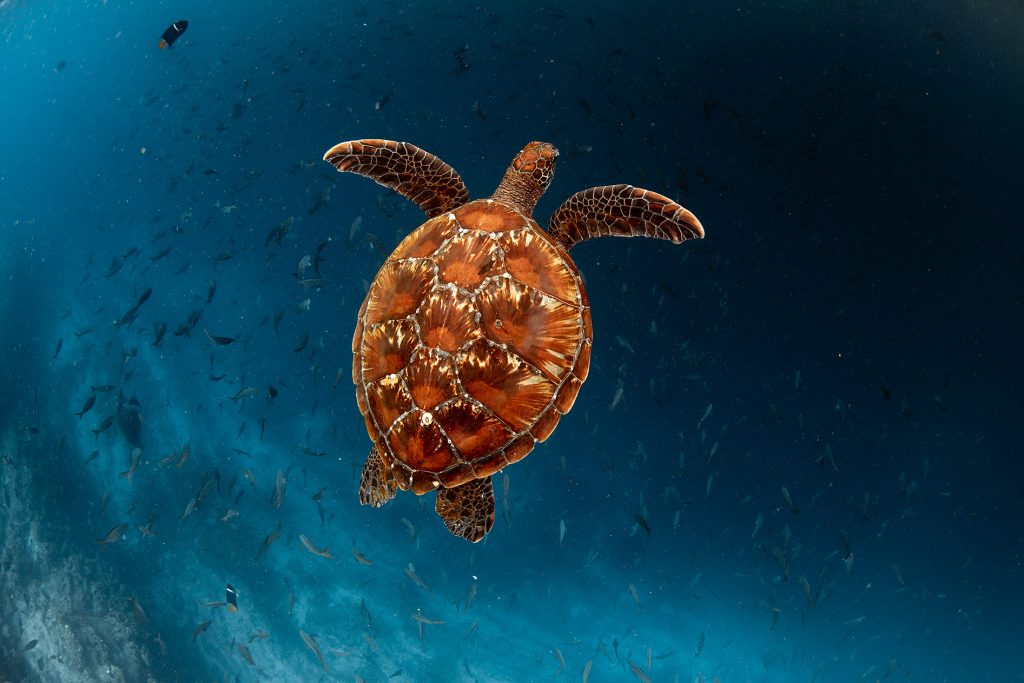
Green sea turtles can be encountered year-round throughout the Galapagos, from protected bays and rocky reefs to algae-rich coastal waters.
After the speed of a penguin or the playfulness of a sea lion, swimming near a sea turtle brings a completely different rhythm. Their slow, graceful movement invites snorkelers to simply float nearby and watch.
Follow their pace without closing the distance or blocking their route to the surface. For photographs, leave open water ahead of the turtle rather than filling the entire frame, creating a greater sense of movement through its underwater world.
7. Go deeper for whale sharks
For experienced scuba divers, Darwin and Wolf islands offer the Galapagos’ legendary whale shark encounters, with June through November falling within prime whale shark season.
These remote northern islands are reached on dedicated liveaboard itineraries such as those aboard Galapagos Sky, where divers may encounter the world’s largest fish emerging seemingly from nowhere out of the blue.
Whale shark encounters aboard Galapagos Sky are for scuba divers rather than snorkelers, and these sought-after departures are worth planning well ahead.
Many divers reserve their Galapagos trips two years or more in advance, particularly for prime seasonal dates. For underwater photography, a fisheye or wide-angle zoom lens can help capture the immense scale of these gentle giants.
How to Actually See the Galapagos Underwater
No wildlife encounter in the Galapagos can be scheduled or guaranteed. Currents shift, animals move, and a quiet stretch of ocean can suddenly become the most memorable part of a journey. That unpredictability is part of what makes exploring beneath the surface so rewarding.
For travelers who want to see more, two weeks in the Galapagos opens up even greater possibilities.
Experienced scuba divers can combine a week aboard Galapagos Sky with an additional week exploring the archipelago aboard one of Ecoventura’s expedition yachts, Origin, Theory & Evolve, pairing world-class diving with snorkeling, island excursions, and wildlife encounters above and below the water.
Whether it’s a sea lion swimming alongside you, a marine iguana grazing beneath the surface, or the silhouette of a whale shark appearing in the blue, the best underwater encounters in the Galapagos share something in common — you enter their world, and nature decides what happens next.