

Picture this.
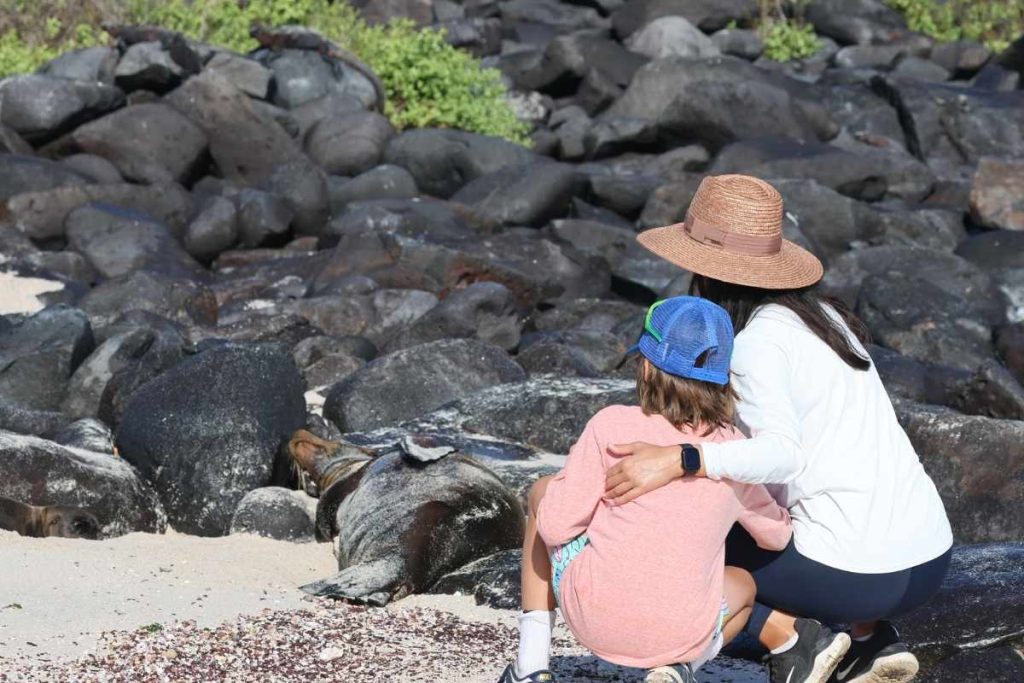
Your nine-year-old is standing on a black lava beach in the equatorial Pacific, completely silent. That in itself is remarkable. But what has stopped them is a Galapagos sea lion pup — maybe three months old — that has paddled in from the surf, hauled itself across the sand, and is now examining your child’s sneaker with what can only be described as professional curiosity. It sniffs. It nudges. It makes a sound somewhere between a bark and a hiccup.
Your child slowly turns to look at you. Their expression says everything: Is this real? Are we allowed to be here? And then, just as slowly, they turn back to the sea lion. Because they cannot look away. This is the Galapagos. This is what it does to children. And it’s an experience families tend to remember long after they return home.
Yet we hear the hesitations, and we hear them often. It’s expensive. What if they get seasick? Are my kids old enough? Will they sit through briefings? Is it safe? These are the questions of thoughtful parents who want to get this right. So let’s address every single one — honestly, with the specifics you actually need — because a family Galapagos cruise with Ecoventura is not just a holiday. It is one of those experiences your children will carry into adulthood, the kind that quietly shapes who they become.
Why the Galapagos Is Unlike Any Other Family Destination
Before we get into the logistics, let’s talk about what makes this place categorically different from every other “family-friendly” destination you’ve considered.
The Galapagos Islands sit roughly 600 miles off the coast of Ecuador in the Pacific Ocean, a volcanic archipelago so isolated that evolution here took an entirely different path. The animals that colonized these islands — penguins, iguanas, tortoises, sea lions, boobies, cormorants — had no land predators. They never developed fear. Not of each other, and not of humans.
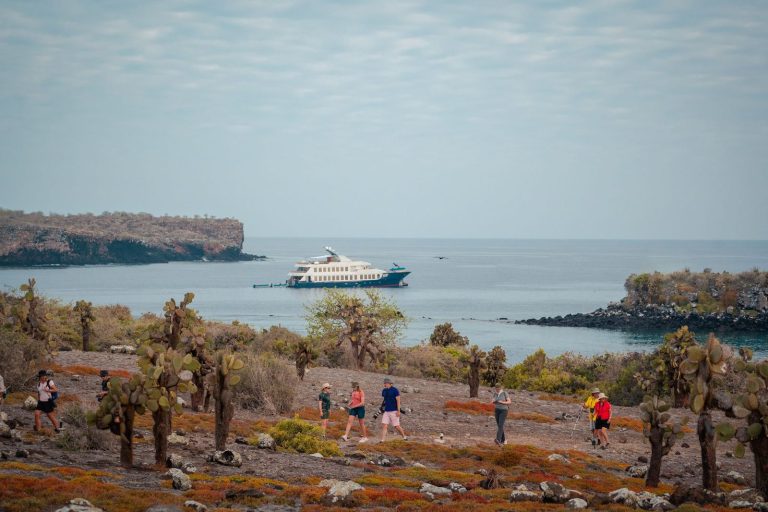
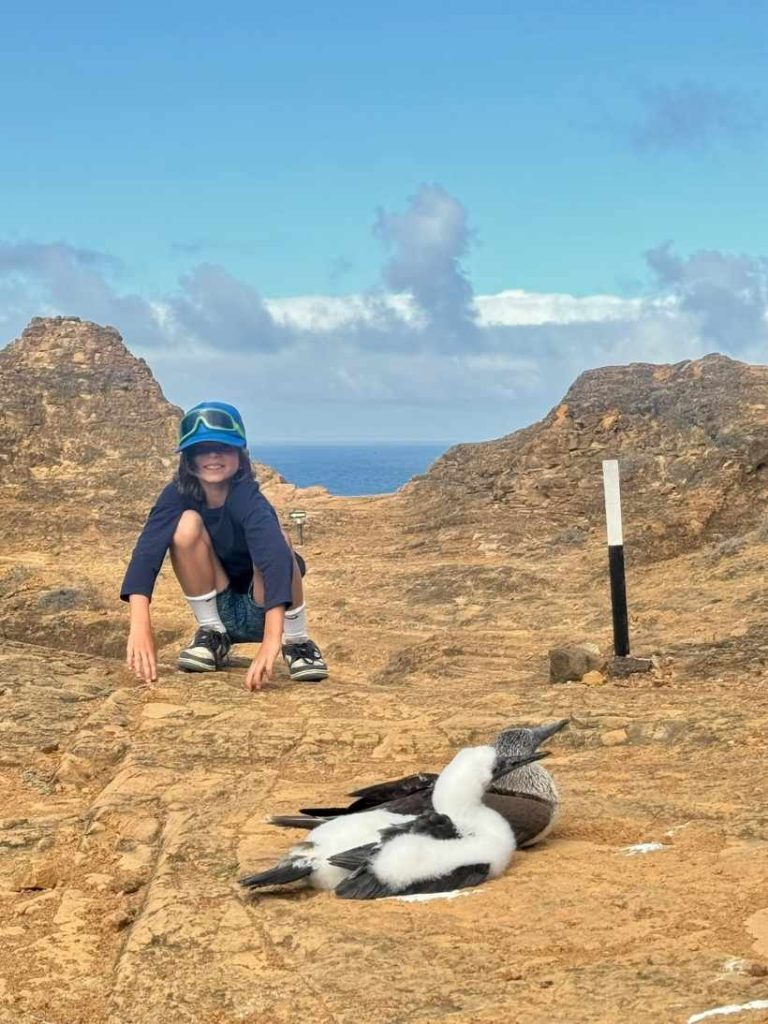
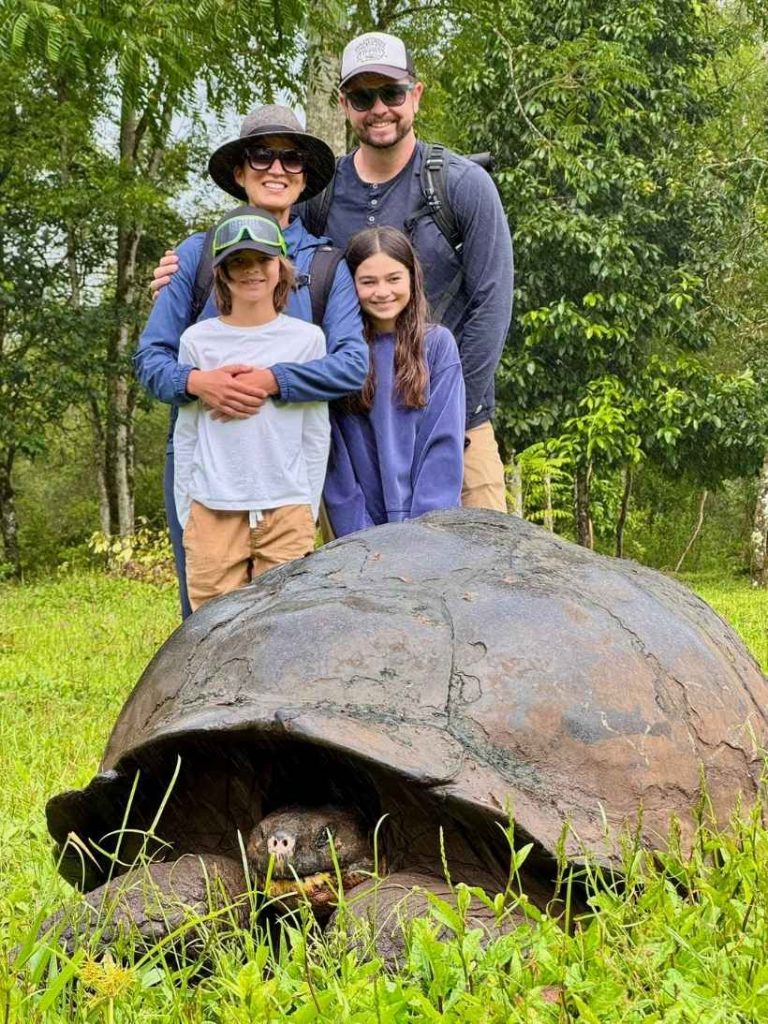
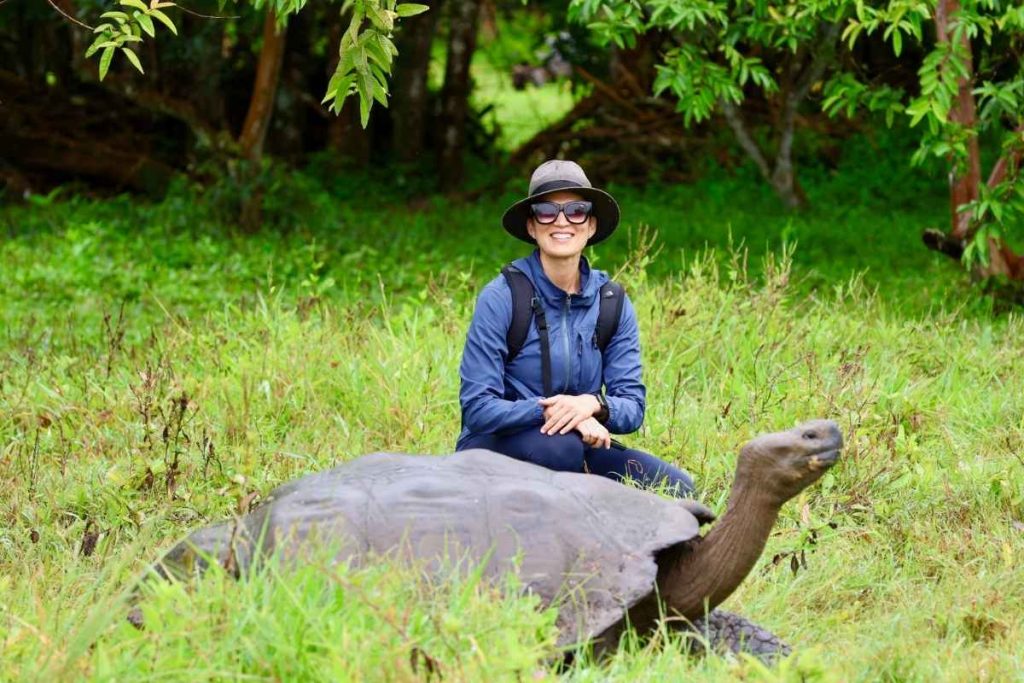
What that means for your family is this: you do not view Galapagos wildlife from behind glass, from a boat’s railing, or through binoculars from a respectable distance. You walk alongside it. The giant tortoise crosses the path in front of you, indifferent to your presence, and continues on its way as if you are a mildly interesting rock. The blue-footed booby performs its courtship dance three feet from your child’s feet, lifting its improbable blue feet with complete self-assurance. A marine iguana the color of charcoal and dried blood heats itself on a lava boulder while you watch from close enough to see it breathe. For children, this isn’t just exciting. It’s formative. They aren’t tourists peering through a fence. They are guests inside an ecosystem, and the ecosystem carries on entirely without them. That distinction — that humbling, wonderful irrelevance — teaches children something that cannot be taught in a classroom.
The islands also operate under strict Galapagos National Park regulations: visitor numbers are tightly controlled, habitats are protected, and every excursion must be led by a certified naturalist guide. The result is that the Galapagos feels, even now, like a place that belongs to nature first and to humans only occasionally. That framing is not lost on children.
What Kids Actually Love (vs. What Parents Fear)
What parents worry about: Restless kids on long hikes. Boredom between excursions. Briefings that go over their heads. What actually happens: children in the Galapagos are rarely bored, and here’s why. From the moment they step off the zodiac and plant their feet on a beach occupied by sea lions, the ordinary rules of their attention spans suspend themselves. Animals that simply do not run away have a hold on the imagination that no screen can replicate.
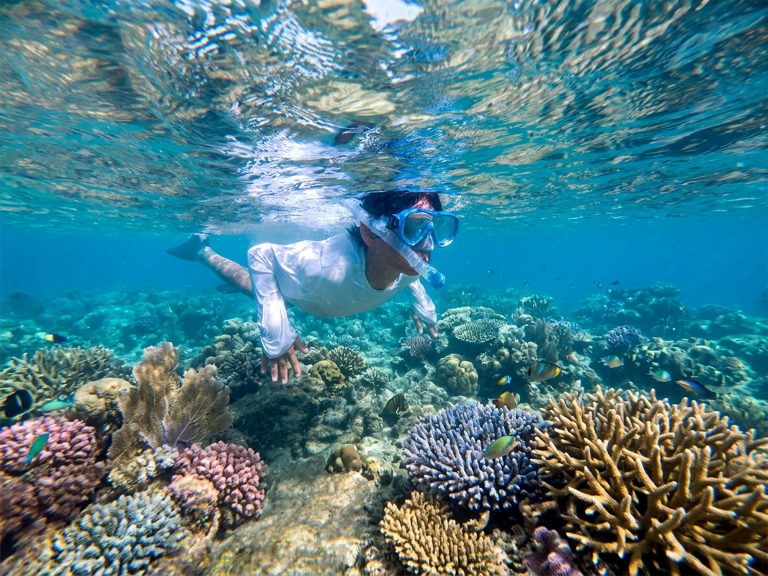
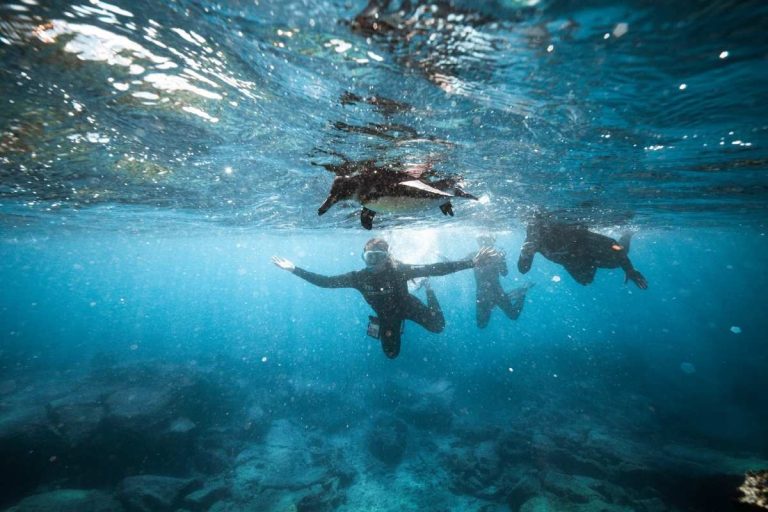
Snorkeling is particularly revelatory for children. The Galapagos Marine Reserve is one of the richest underwater environments on Earth, and in many areas the water is calm, the visibility long, and the wildlife abundant. For children who are tentative swimmers, the experience of encountering a sea lion underwater — curious, fast, close — tends to transform the relationship with the ocean in a single afternoon.
Back aboard the Ecoventura yachts, the experience doesn’t stop. Our naturalist guides run evening briefings that are anything but lectures — they’re conversations, with maps and specimens and the kind of storytelling that makes children lean forward in their seats. On Family Departures, the crew organizes movie nightsand chef-led pizza-making parties. Children who’ve hit their limit of wonder for one afternoon can retreat to the library with its stash of books and board games, or find a spot on the sundeck and simply watch the ocean move past.
Are My Kids Old Enough for the Galapagos?
Ecoventura welcomes families with children aged 6 and above on scheduled departures, with a 15% savings extended to guests aged 17 and under. Families traveling with younger children are welcome on private charters.
The Ecoventura Family Departure: Designed, Not Just Permitted
There is a meaningful difference between a cruise that allows children and one that is genuinely built for families. Ecoventura’s Family Departures are the latter — shaped by over 35 years of experience and direct guest feedback from the families who’ve sailed with us.
A ship designed around family logistics.
All ten staterooms on each Ecoventura yacht are located on the same deck. Two sets of cabins can be interconnecting, ideal for families of four or five. Triple accommodations are available with a Pullman berth designed for a child or small teenager. Cabins are approximately 145 square feet and feature blackout curtains, individual climate control, and large ocean-view windows. Wetsuits are provided in children’s sizes, including smaller shorty options, at no additional charge.
The company of other families. On designated Family Departures, you travel with people in the same situation — parents navigating the same questions, children finding each other across the dining table within an hour of boarding. Multi-generational groups are common, and the 20-person maximum aboard each yacht ensures that the atmosphere remains intimate rather than logistically overwhelming. Whenever possible, our reservations team also takes care to align families by age ranges and travel styles, helping create a more natural dynamic on board from the very first day.
A crew that cares about the details.
One guest described her family’s experience this way: “We were three families with five kids ages 11 to 15 and our boat, guide, crew, and experience went beyond my expectations. The service was 5 star — they went above and beyond every day, but especially for my son’s 13th birthday.” The crew can arrange birthday cakes, a bottle of wine for the adults, and personalized moments that mean everything.
Sustainability your children will absorb without knowing it. Ecoventura was the first recipient of the SmartVoyager ecological certification in 2000, voluntarily introducing conservation standards that were later written into local regulations. Since 2017, in partnership with the Charles Darwin Foundation and the Galapagos National Park Directorate, Ecoventura has raised over $800,000 for the Galapagos Biodiversity & Education for Sustainability Fund — supporting scientific research, conservation projects, and university scholarships for local Galapagos youth. When your naturalist guide explains why a species matters, why invasive species are a crisis, why the park rules aren’t arbitrary — they’re speaking from a company whose financial commitment to these islands is genuine and documented. Children pick up on that.
Two Itineraries, Both Extraordinary
Every Ecoventura departure is a seven-night cruise, departing on Sundays. Two itineraries alternate to minimize environmental impact on any single site — a rotation required by the Galapagos National Park.
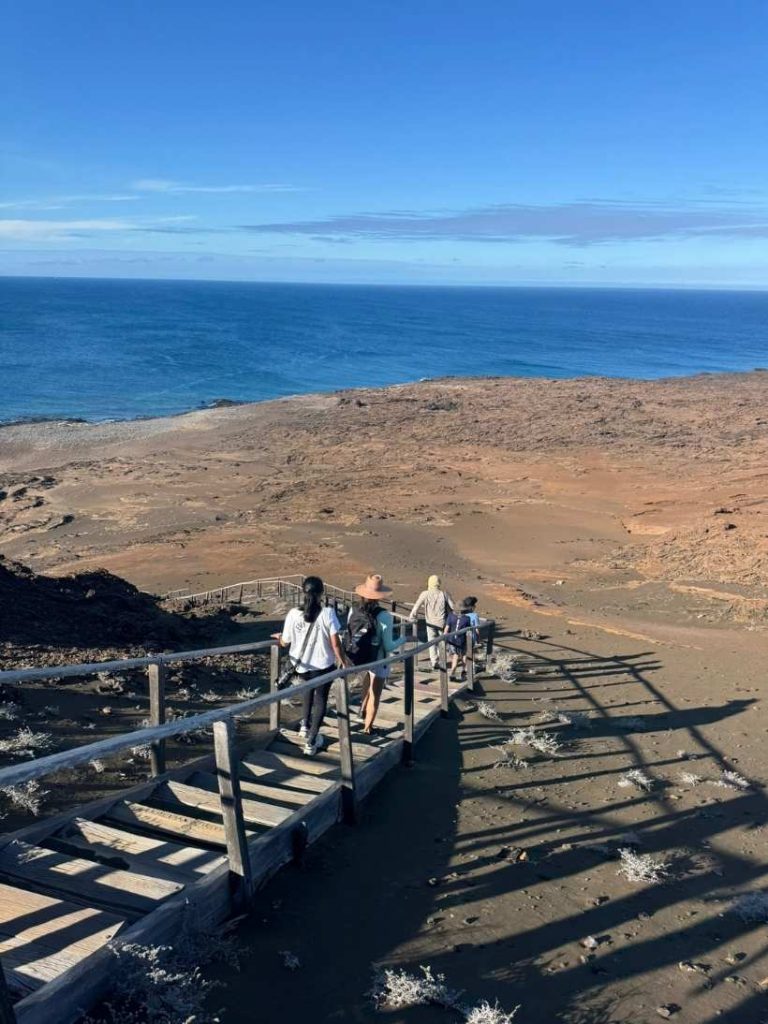
Itinerary A — Beaches & Bays explores the southern and central islands, known for their diverse landscapes and classic Galapagos wildlife encounters. From San Cristobal and Española to Floreana, Santa Cruz, and Bartolome, each day brings a different setting — from white-sand beaches and volcanic coastlines to lush highlands where giant tortoises roam freely. Highlights include Española Island during waved albatross season, snorkeling alongside sea lions and reef fish, and visiting iconic sites like Bartolome’s Pinnacle Rock.
Itinerary B — Volcanic Wonders ventures to the more remote western and northern regions of the archipelago, including Isabela and Fernandina Islands — among the youngest and most geologically active in the Galapagos. Here, dramatic lava fields and rugged coastlines set the stage for some of the most unique wildlife encounters in the islands, from flightless cormorants and marine iguanas feeding underwater to large seabird colonies on Genovesa Island.
Family Departures are offered during major U.S. school breaks — winter, spring, and summer — with 2026 and 2027 sailings now available. Given the limited capacity of just 20 guests per yacht and the popularity of these dates, availability can be limited, particularly for connecting cabins. Families who plan ahead tend to have greater flexibility in selecting their preferred sailing and accommodations, especially during peak holiday periods. Children aged 17 and under receive a 15% discount on the cruise rate, with a minimum age of 6 years.