

As part of Ecoventura’s team, I’ve watched countless guests fall into the same awe as these gentle giants lift their heads from beds of green. Meeting the giant tortoises of the Galapagos isn’t just a wildlife sighting—it feels like stepping into an ancient story we’re now responsible for helping protect.
Where to See Giant Tortoises on Santa Cruz
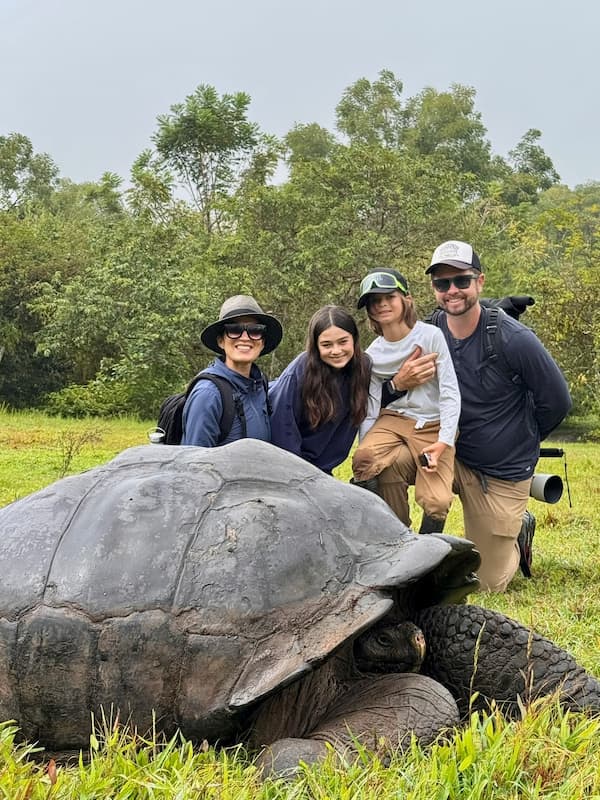
If you’re wondering where to see giant tortoises on Santa Cruz, the answer is simple: this island is one of the best places in the entire archipelago to find them roaming freely. The Galapagos highlands offer lush vegetation, soft ground, and abundant water—everything a giant tortoise loves. When we bring our guests here, there’s always a moment when someone whispers, “They’re really just… out here.” And they are! Wandering through the farms, forests, and protected reserves of Santa Cruz.
Our visits include a stop at one of the natural giant tortoise reserve centers in the Santa Cruz highlands, such as Rancho Primicias or El Chato. Located within private properties that protect extensive native habitat, these reserves allow for an authentic, respectful encounter with one of the Galápagos’ most iconic species—one of the most memorable wildlife experiences we share on Santa Cruz.
For guests traveling with Ecoventura, giant tortoises are experienced on both itineraries—Itinerary A: Beaches & Bays and Itinerary B: Volcanic Wonders. Encounters take place not only in the Santa Cruz highlands at a giant tortoise reserve, but also at the Charles Darwin Research Station, offering a deeper and more comprehensive understanding of these remarkable animals, their conservation, and their role in the living history of the Galápagos.


Fascinating Fun Facts About Galapagos Giant Tortoises
Below are some guest-favorite insights—little stories and science tidbits that we often share on excursions.
Centuries-Long Lifespans
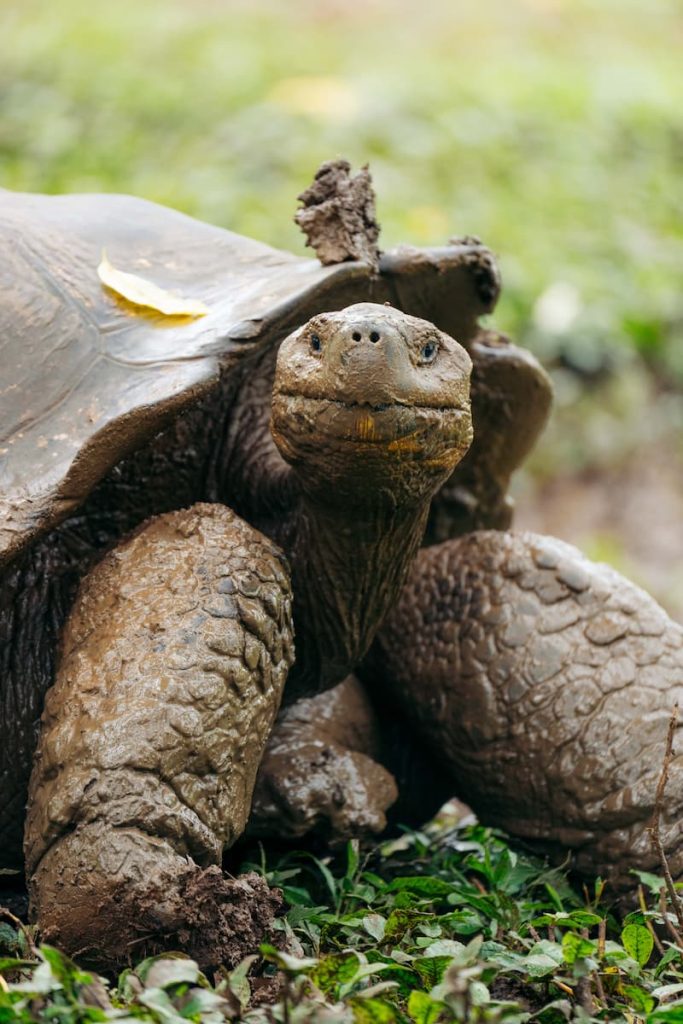
Giant tortoises move through life slowly—and for good reason. With lifespans that often reach 100 years or more, generations have passed around them while they continue to wander the highlands at their own pace, seemingly untouched by time.
Their Incredible Size & Strength
They can weigh up to 550 pounds (250 kg) and stretch more than five feet in length—yet they move with surprising determination. Watching one cross a grassy trail reminds you that “slow” doesn’t mean “weak.”
Shell Shapes That Tell Evolutionary Stories
Across the Galapagos, giant tortoise shells vary in shape depending on their environment.
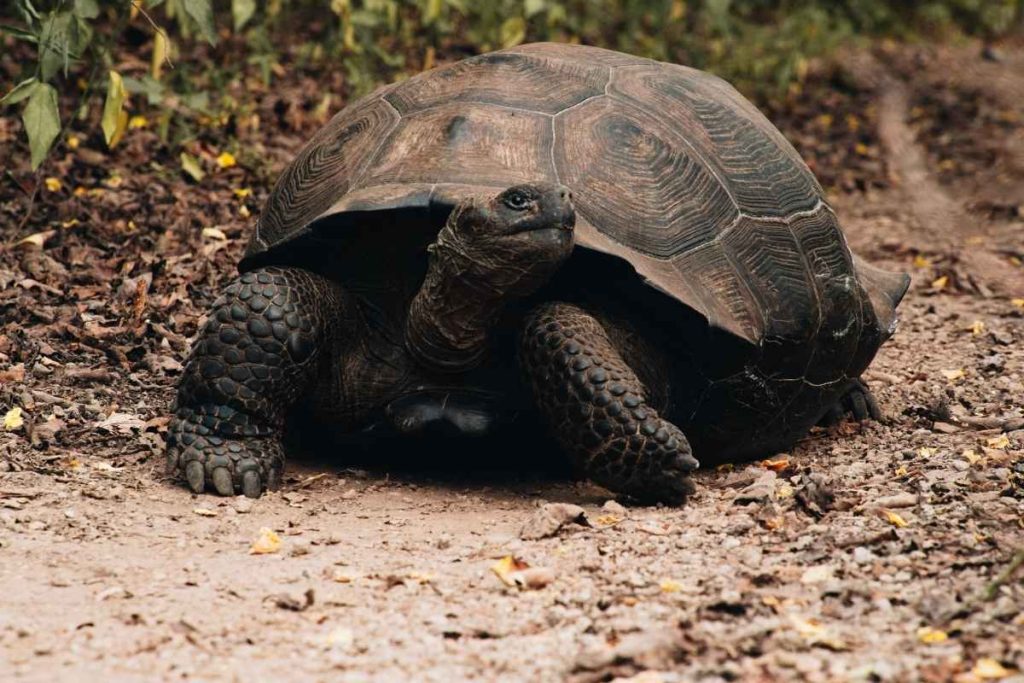
On islands with more abundant vegetation—like Santa Cruz—tortoises typically have domed shells, suited for grazing on low-growing plants. On drier islands with sparse vegetation, many tortoises evolved saddleback shells, allowing them to stretch their necks higher to reach food.
These distinctive forms are the result of millions of years of adaptation—nature shaping survival, one subtle curve at a time.

Seasonal Migrations Through Santa Cruz
Giant tortoises are known to move seasonally between the lowlands and the humid highlands of Santa Cruz, guided by rainfall patterns and available food. Their gradual journeys form one of the island’s most enduring natural rhythms, connecting them deeply to the changing landscape around them.
How They Survive a Year Without Food or Water
Thanks to their slow metabolism, giant tortoises can survive for months with very little food or water. This remarkable adaptation helped them thrive on remote volcanic islands, where resources can be scarce. Whenever we share this with guests, it always sparks awe—a reminder that resilience often lives behind the quietest creatures.
Unique Species Across the Islands
Across several Galapagos islands, giant tortoises have evolved into distinct species or subspecies, each shaped by the terrain and climate of its home island. Many are threatened or recovering, and together they tell a living story of adaptation—written across their shells and carried forward through generations.
Tiny Beginnings: Baby Tortoises
It surprises everyone: hatchlings are only about 2–3 inches long. Perfectly formed miniature tortoises, they begin life incredibly small and vulnerable. Seeing these tiny newcomers at breeding centers is a gentle reminder that every giant begins with fragile hope—and that conservation plays a vital role in their survival.

Conservation Efforts: Protecting the Giants of Santa Cruz
A story of loss and remarkable recovery, the giant tortoise’s journey is one marked by resilience. Once pushed to the brink by whalers and invasive species, tortoise populations have gradually rebounded thanks to decades of dedicated conservation efforts.
The Role of the Galapagos National Park & Charles Darwin Research Station
These two organizations spearhead the movement to bring back populations of enormous tortoises. Monitoring wild turtles, preserving nesting sites, and genetic study of each species’ past define the large tortoise initiative of the Charles Darwin Research Station.
Breeding Centers & Long-Term Restoration Projects
Eggs are incubated and shielded; hatchlings are nurtured until they are strong enough to withstand predators. These early-life safeguards are what have helped many of the tortoises you will encounter in the wild nowadays survive.
How Ecoventura Supports Galapagos Tortoise Conservation
At Ecoventura, conservation is woven into everything we do. Our visits are designed not only to observe Galápagos wildlife responsibly, but to actively support its protection—both in the field and beyond.
Since 2017, we have partnered with the Charles Darwin Foundation and the Galápagos National Park Service through the Galápagos Biodiversity & Education for Sustainability Fund (GBESF). This long-term initiative supports scientific research, education, habitat protection, and the conservation of iconic species such as the giant tortoise.
Through this collaboration, and by educating travelers alongside our expert naturalist guides, we aim to ensure that future generations will continue to encounter giant tortoises not as relics of the past, but as living symbols of Galápagos resilience.
How Visitors Contribute to Protection Efforts
Every time you visit a giant tortoise reserve in Santa Cruz, learn from Park rangers, or support local communities, you directly help protect these ancient reptiles. Your curiosity becomes part of the solution.

When Is the Best Time to See Giant Tortoises in the Galapagos?
The good news: tortoises are present in the Santa Cruz highlands year-round. But each season brings its own magic:
- Dry season (June–November): Many tortoises migrate to the highlands—great for consistent sightings.
- Wet season (December–May): The landscape blooms, and tortoises tend to be more active.
Planning Your Visit With Ecoventura
Exploring Santa Cruz with Ecoventura feels personal—intimate yachts, small groups, and guides who know the islands as old friends. When we bring guests to the highlands to meet giant tortoises, we do it slowly and respectfully, with time to pause, breathe, and listen to the rustle of shells through the grass.
Our itineraries are designed so you don’t just see Galapagos wildlife—you understand it, connect with it, and help protect it. The giant tortoises of Santa Cruz are a highlight not because they’re big, but because they remind us how much life here depends on balance, respect, and thoughtful exploration.