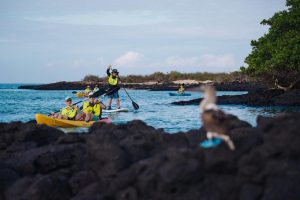


Have you ever seen a bird that forgot how to fly? Keep reading to learn why the flightless cormorant is one of the Galapagos Islands’ most surprising evolutionary stories.
Evolution and Adaptation in the Galapagos Islands
The Galapagos Islands are often referred to as a living laboratory of evolution. Isolated from the mainland and rich in ecological diversity, the archipelago has given rise to species found nowhere else on Earth. Here, Darwin developed his groundbreaking theory of natural selection, inspired by the archipelago’s iconic wildlife.
The flightless cormorant is a textbook example of this evolutionary phenomenon. Descended from flying cormorants, these birds gradually adapted to their environment by losing the ability to fly—an extraordinary trait that would be detrimental elsewhere, but advantageous in the Galapagos. Their small wings and strong legs are perfect for diving and hunting fish, their primary food source.
Why Did Flightless Cormorants Lose Their Ability to Fly?
On islands where predators are scarce and food is abundant in the sea, flight becomes less essential. Over generations, the cormorants of the Galapagos began to favor traits that enhanced their swimming ability rather than flight. Their wings shrank, their bones became denser, and their bodies became more streamlined for underwater movement.
This evolutionary trade-off allowed the flightless cormorant to thrive in its coastal habitat. Today, they are expert divers, using their webbed feet to propel themselves and their stubby wings for balance and direction beneath the water’s surface. Their transformation is a powerful reminder of how species can change in response to their environment.
Comparison with Other Endemic Species
The Galapagos are home to a number of endemic species that have undergone similarly unique evolutionary paths. Consider:
- Marine iguanas, the only sea-swimming lizards in the world
- Darwin’s finches, which evolved distinct beak shapes to exploit different food sources
- Galapagos penguins, which are among the few to live north of the equator
Like these species, the flightless cormorant is a symbol of the islands’ isolation and the extraordinary biodiversity that isolation fosters. What all these creatures share is an ability to adapt in surprising and specialized ways—often challenging what we think we know about evolution.
Behavior and Ecology of the Flightless Cormorant
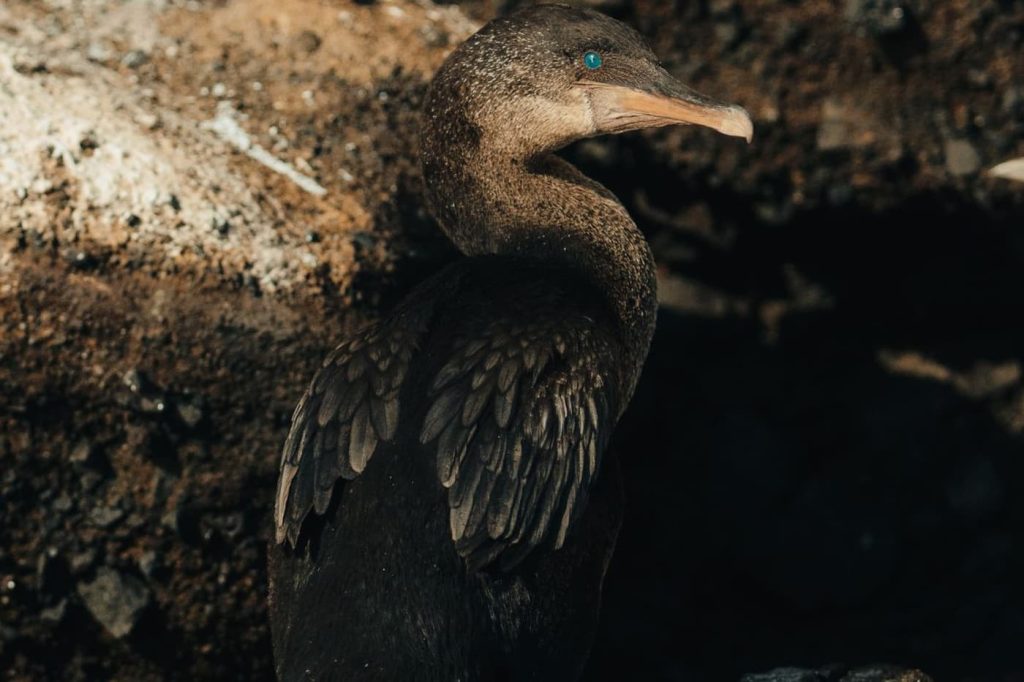
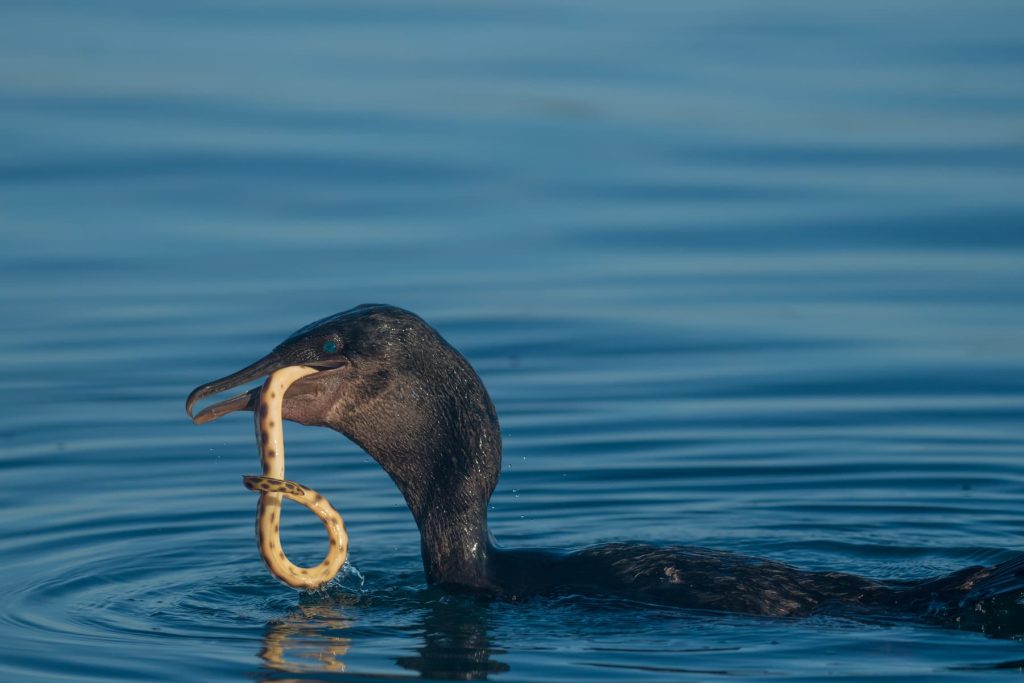
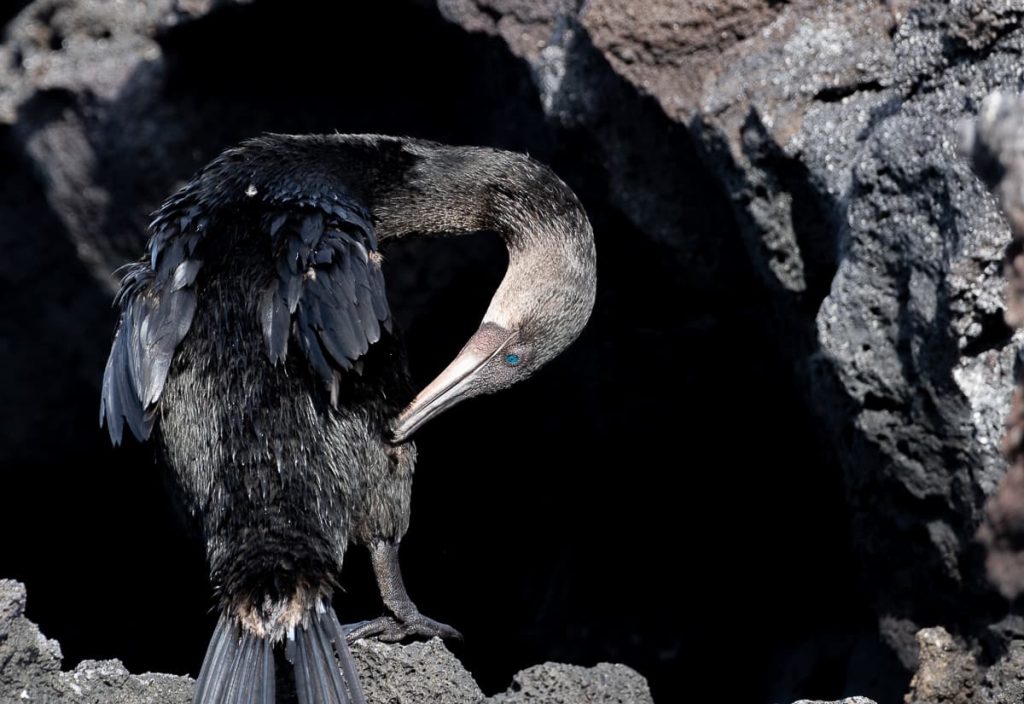
Flightless cormorants lead a largely aquatic life, spending much of their time hunting in coastal waters. They feed primarily on eels, small octopuses, and fish, using their keen eyesight and agility to catch prey. After diving, they can often be seen perched on volcanic rocks, wings outstretched to dry—unlike their flying relatives, their feathers are not fully waterproof.
These birds form monogamous pairs during the breeding season and are known for their elaborate courtship rituals. Nesting occurs close to shore, where the female lays up to three eggs in nests made of seaweed and debris. The chicks hatch after about a month and remain dependent on their parents for several weeks.
Conservation Status and Ecotourism
The flightless cormorant is considered vulnerable due to its small population and limited range. Protecting this rare bird is a shared responsibility between conservation groups, local authorities, and eco-conscious travelers.
Current Threats and Protection Efforts
Although the flightless cormorant population is stable, it remains vulnerable due to its limited range. With only about 1,000 breeding pairs in existence, any disturbance to their habitat—such as oil spills, marine pollution, or invasive species—could have serious consequences.
The Galapagos National Park and various conservation organizations actively monitor the species, conducting regular population surveys and implementing programs to control invasive animals. Climate change also poses a growing threat, as warming ocean temperatures may affect the availability of food.
How Visitors Can Observe the Animal Responsibly
During our Itinerary B: Volcanic Wonders guests have the rare opportunity to observe and snorkel near the flightless cormorant. Found primarily on Fernandina and the western coast of Isabela, watching them dive underwater in search of fish offers a fascinating glimpse into adaptive evolution, and snorkeling in their habitat allows guests to witness their agility and grace up close in the wild.
Why the Flightless Cormorant Symbolizes the Galapagos
Few animals embody the spirit of the Galapagos like the flightless cormorant. Its evolution tells a story of transformation and adaptation, born from the isolation of the islands themselves.
Its inability to fly, once seen as a weakness, is now its greatest strength. The bird thrives not by escaping threats, but by mastering its unique environment—an idea that reflects the resilience of Galapagos wildlife as a whole.
To see a flightless cormorant drying its wings on black volcanic rock is to witness the power of nature’s ingenuity. It’s a silent ambassador for the islands, reminding us why this ecosystem is unlike any other on Earth.
Plan Your Galapagos Adventure with Ecoventura
Our award-winning yacht expeditions bring you face to face with the Galapagos’ most iconic species, including the elusive flightless cormorant. Join us and experience the wonder of these islands responsibly and intimately, with a team that values both discovery and conservation.